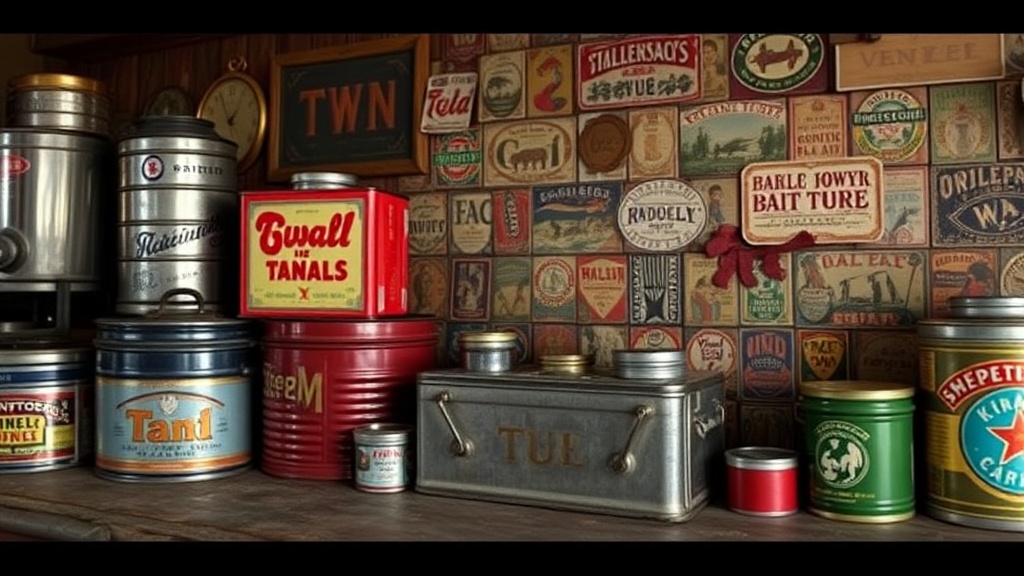
7 Signs Your Vintage Tin Might Be Worth More Than You Think

You found it at the back of your grandmother's pantry—maybe at a garage sale in St. Boniface, maybe while cleaning out a shed in Transcona. A small metal tin with faded colors, perhaps a bit of rust around the edges, and some company name you've never heard of printed on the lid. Most people would toss it in a recycling bin or use it for loose screws. But collectors know better. That humble container might be a sought-after piece of advertising history worth anywhere from twenty dollars to several hundred.
Vintage tins—tobacco tins, spice tins, coffee cans, candy boxes, and medicinal containers—occupy a fascinating corner of the collectibles world. They don't get the headlines that rare coins or colored glass bottles receive, but dedicated collectors hunt them with equal fervor. The market rewards specific characteristics that separate genuine treasures from modern reproductions and common junk. Here's what separates the keepers from the clutter.
What Makes Certain Vintage Tins So Collectible?
The appeal starts with utility and nostalgia. These metal containers protected goods before plastic dominated packaging, and their lithographed artwork captured the graphic design sensibilities of their eras—from Victorian flourishes to Art Deco geometry to mid-century modern simplicity. Collectors value them as miniature time capsules of commercial art, industrial design, and regional business history.
Unlike bottles or caps, tins could be manufactured in almost any shape. Round, square, rectangular, hinged, slip-cover, hinged with clasps—the variety is staggering. This diversity means there's always something new to discover, even for experienced collectors. And because they were designed to be disposable, surviving examples in good condition command attention.
How Can You Tell If a Tin Is Actually Old?
Age identification requires looking at several elements simultaneously. The lithography process itself tells part of the story. Early tins (roughly 1870s-1920s) were printed using stone lithography, which produces images with softer edges and slightly imperfect color registration. Later offset lithography yields sharper, more uniform colors. The difference becomes visible once you've examined enough examples.
The metal construction reveals manufacturing methods. Hand-soldered seams indicate pre-1900 production in many cases. Machine-seamed bodies suggest 20th-century manufacture. Some very early tins have folded and crimped seams rather than solder. The base construction matters too—does it have a separate base piece crimped on, or is it drawn from a single sheet of metal?
Look for patent dates, company addresses, and product claims. "Patent Applied For" or specific patent numbers help date pieces precisely. Company locations that no longer exist—like specific street addresses in old downtown districts—can be researched through city directories to establish manufacturing windows.
Which Condition Issues Actually Matter?
Perfect condition is rare and valuable, but collectors understand that these metal objects survived decades of use. Surface scratches and minor dents often don't significantly impact value if the lithography remains visible and attractive. What does hurt value substantially?
- Rust that has eaten through the metal or destroyed large portions of the printed design
- Active rust that continues to spread and threatens structural integrity
- Replacement lids or mixed parts from different tins
- Modern touch-up paint that attempts to hide wear
- Severe dents that distort the original shape
Interestingly, some collectors actually prefer slight wear—a bit of honest patina proves the piece saw real use and isn't a modern reproduction made to look old. The key is distinguishing between "character" and damage that compromises the object's integrity.
Why Do Some Tins Command Premium Prices?
Rarity drives value, but scarcity alone isn't enough. A tin for an obscure product nobody remembers might be genuinely rare yet worth little because nobody wants it. The most valuable pieces combine scarcity with desirability factors.
Brand recognition matters enormously. Tobacco tins from major companies like Prince Albert, Velvet, or Lucky Strike have established collector markets because thousands of people specifically hunt advertising from these brands. The same principle applies to coffee companies, biscuit manufacturers, and medicinal products. Antique Trader's guide to tin collecting provides excellent context on how brand history influences current values.
Regional significance adds premiums. A tin from a Winnipeg-based company that only distributed in Manitoba will attract strong interest from local collectors even if national collectors ignore it. These pieces document regional business history that might exist nowhere else.
Graphic appeal counts. Tins with striking artwork, unusual colors, attractive women, children, animals, or sports imagery often outperform plainer examples from the same era. People buy what they enjoy looking at.
What Should You Never Do When Cleaning a Vintage Tin?
The urge to "improve" a find is nearly irresistible, but resist you must. Water and metal don't mix—at least not in ways that benefit collectors. Never immerse a vintage tin in water, never run it through a dishwasher, and never use abrasive cleaners or steel wool.
The lithographed surface is essentially paint on metal. Aggressive cleaning removes that paint along with the dirt. Worse, moisture trapped in seams accelerates rust that might otherwise remain dormant for decades.
Appropriate cleaning involves dry methods first—soft brushes, compressed air, dry cloths. For stubborn grime, a slightly damp cloth followed by immediate thorough drying might help, but this risks damage and should be approached cautiously. The National Park Service conservation guidelines offer professional perspectives on metal object preservation that apply directly to collectible tins.
Never attempt to "stabilize" rust by painting over it. Modern paint destroys authenticity completely. If rust threatens structural integrity, professional conservation is the only appropriate path—and even that reduces value compared to untouched original condition.
Where Should You Look for Undervalued Tins?
Estate sales often yield the best finds because families clearing out homes don't know what they have. The tin holding buttons or nails might be the most valuable item in the entire house. Thrift stores occasionally receive donations of old kitchen contents. Farm auctions can produce tobacco and veterinary medicine tins that sat in barns for generations.
Online marketplaces require more caution. Photos can hide condition issues, and reproduction tins flood these platforms. Learn to recognize modern manufacturing clues—overly bright colors, perfect condition on supposedly old items, anachronistic construction methods. When a deal seems too good to be true, the tin is probably from last Tuesday rather than 1922.
Building relationships with antique dealers who understand your interests helps. They'll notify you when interesting pieces arrive rather than pricing them generically for quick turnover. Smithsonian Magazine's exploration of tin can history provides useful background for understanding what you're actually looking at in the field.
How Should You Store and Display Your Collection?
Environmental control matters enormously. Tins stored in humid basements develop rust. Tins displayed in direct sunlight fade as UV light breaks down the organic pigments in vintage lithography. Ideal storage is dry, stable in temperature, and protected from light when not being viewed.
Stacking tins risks scratching and denting. Open shelving allows dust accumulation that requires cleaning (which risks damage). Glass-front cabinets solve both problems while keeping collections visible. For valuable pieces, individual archival storage boxes provide maximum protection.
Documentation adds research value. Photograph your tins, record manufacturer information, and note where and when you acquired each piece. This provenance helps future collectors understand the object's history and can modestly enhance value.
The vintage tin market rewards knowledge, patience, and a willingness to look past surface grime to the history beneath. Your grandmother's pantry might hold more than memories—it might hold a piece of commercial art worth preserving for another generation.