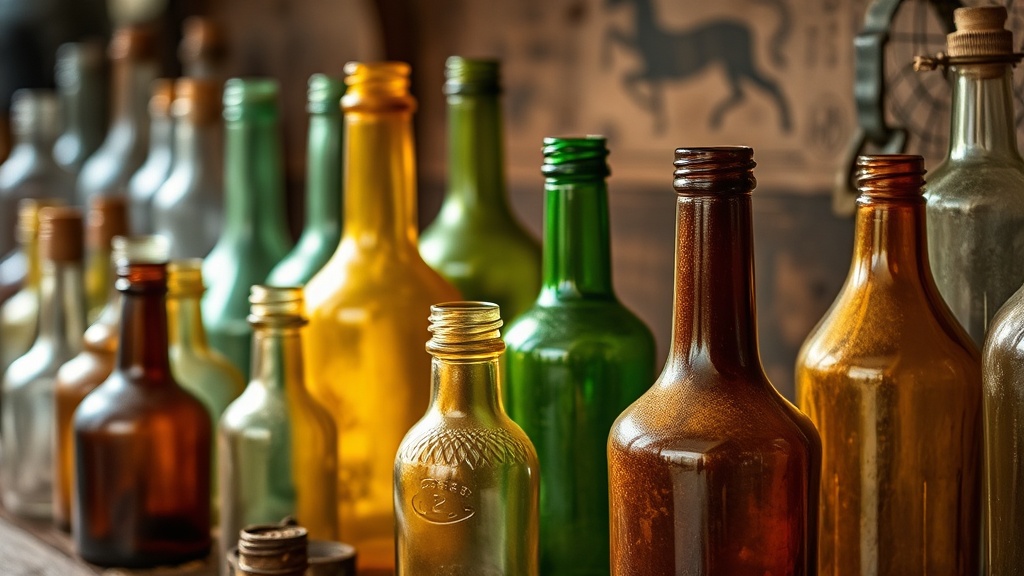
Digging Up History: A Beginner's Guide to Finding Antique Bottles

This post covers the fundamentals of locating, identifying, and preserving antique glass bottles — from old medicine containers to vintage soda bottles and whiskey flasks. Bottle digging connects collectors directly to history through tangible artifacts, offering both recreational enjoyment and potential value for those willing to learn the craft. Whether scouting riverbanks after spring floods or exploring the foundations of long-demolished buildings, the hunt rewards patience with discoveries that tell stories about daily life decades — sometimes centuries — ago.
Where Can Beginners Find Antique Bottles?
Beginners can find antique bottles at old dump sites, along riverbanks, at abandoned homesteads, and in the foundations of demolished buildings. The key is understanding where people once discarded their refuse — and where time has been kind to the glass left behind.
Old municipal dump sites represent prime territory. Before modern garbage collection, towns often designated specific pits or ravines for waste disposal. These sites — typically dating from the 1880s through the 1940s — contain layers of household debris. The oldest bottles usually sit deepest, protected from UV light and temperature swings that crack surface-level finds.
Riverbanks and creek beds offer accessible hunting grounds. Spring floods scour soil and deposit bottles along gravel bars and cutbanks. In Winnipeg and the surrounding Red River Valley, collectors regularly find early 20th-century amber medicine bottles, clear soda bottles, and the occasional cobalt poison bottle exposed after ice breakup. The technique is simple: scan gravel deposits at bends in the waterway where current velocity drops and heavier objects settle.
Abandoned farmsteads and cellar holes hold potential, particularly across the Canadian Prairies and rural America. When homesteaders moved on or buildings burned, bottles often remained in outbuildings, beneath porches, or in designated refuse areas. Always secure permission from landowners — many welcome respectful collectors who fill holes and leave sites tidy. The Smithsonian's bottle collection offers excellent visual references for identifying likely finds at these locations.
Construction sites where old buildings have been demolished can yield surprising treasures. When crews strip foundations, they sometimes expose layers of fill soil containing bottles discarded during original construction or subsequent renovations. Building relationships with demolition contractors creates opportunities — though safety protocols and hard hats are non-negotiable at active sites.
What Tools Do You Need for Bottle Digging?
You'll need a narrow shovel, a hand trowel, a spray bottle, soft brushes, and protective gloves for safe and effective bottle digging. The right equipment prevents damage to fragile finds and protects collectors from cuts, broken glass, and unexpected encounters with rusty metal.
The digging implement matters enormously. A standard round-point shovel is too wide and clumsy for careful extraction. Instead, opt for a drain spade or sharpshooter shovel — narrow-bladed tools that allow precise soil removal around suspected bottles. The Fiskars 46-Inch Steel Transplanting Spade (though marketed for gardening) works well because its tapered blade slides into compacted soil without the jarring impact that fractures glass.
Hand trowels handle the delicate final stages. When a bottle neck or shoulder becomes visible, switch to manual tools. A stainless steel trowel with measurement markings helps gauge depth and provides the control necessary to undercut fragile pieces. Plastic or bamboo gardening tools serve as backup options for extremely brittle glass.
Cleaning begins in the field. A simple spray bottle filled with water (never chemicals at this stage) removes enough dirt to reveal markings, seams, and color accuracy. Soft-bristled paintbrushes — the kind artists use for watercolor work — brush away sediment without scratching glass surfaces. Pack several sizes: wide flat brushes for body cleaning, small rounds for detail work around embossing.
Protection isn't optional. Cut-resistant gloves rated Level 5 or higher (meeting EN 388 standards) shield hands from razor-sharp edges. Safety glasses prevent eye injuries when scraping overhead soil. Heavy boots with puncture-resistant soles protect against nails and broken ceramic hidden in dump layers. Here's the thing: tetanus shots matter. Ensure vaccination status stays current before handling century-old metal and glass.
Field Kit Essentials
| Item | Purpose | Budget Alternative |
|---|---|---|
| Drain spade shovel | Precision soil removal | Standard garden trowel (small digs only) |
| Stiff-bristled brush | Removing caked dirt | Old toothbrush |
| Spray bottle | Field rinsing | Recycled dish soap bottle |
| Cut-resistant gloves | Hand protection | Leather work gloves (less protection) |
| Plastic buckets | Transport and sorting | Reusable shopping bags |
| Camera | Documenting context | Smartphone |
How Do You Identify and Date Old Bottles?
You can date old bottles by examining their base markings, seam lines, color variations, and manufacturing techniques like applied lips or pontil scars. These physical characteristics provide reliable evidence of production era — often more accurate than embossed patent dates, which manufacturers sometimes used for years after filing.
Seam analysis offers the quickest age estimate. Early mouth-blown bottles (pre-1903) show seams only to the shoulder or base of the neck — the top portion was hand-finished after mold removal. Automatic bottle machines (introduced 1903-1905) created seams running the full length, including across the lip itself. Worth noting: some specialty bottles remained hand-blown into the 1920s, so seams indicate manufacturing method rather than absolute date.
Base markings tell manufacturer stories. Numbers often indicate mold cavities or factory codes. Letters typically identify glass companies — "OWENS" for Owens-Illinois, "ROOT" for Root Glass Company (famous for Coca-Cola bottles). The Society for Historical Archaeology's bottle website maintains extensive databases correlating these marks with specific plants and date ranges.
Color carries chronological clues. The earliest bottles (pre-1870s) often appear olive green, amber, or aquamarine — natural glass colors before chemical decolorizers became standard. Clear "flint" glass became common after 1875. Bright colors like cobalt blue, amethyst, or deep green usually indicate specific contents: poisons, medicines, or premium spirits. That said, color alone can mislead — reproductions abound, and some manufacturers used distinctive hues for decades.
Pontil scars — rough, circular marks on the base — indicate hand-blown production. These form where the pontil rod attached during finishing. Smooth bases with minor concave dimpling suggest machine manufacture. Applied lips (extra glass added and tooled by hand) predate 1910 for most commercial bottles; tooled lips (formed from the same glass as the body) became standard afterward.
Are Old Bottles Worth Anything?
Yes, antique bottles range from $5 for common pieces to over $10,000 for rare colored glass and early patent medicines. Value depends on rarity, condition, color, age, and historical significance — with demand varying significantly by collecting specialty.
Common categories show predictable patterns. Whiskey flasks from the late 1800s — particularly those with embossed scrollwork or historical figures — trade between $50 and $300 depending on condition. Bitters bottles (like Dr. Hostetter's Stomach Bitters or Warner's Safe Cure) command premiums when displaying unusual shapes or colors. Basic household bottles — Listerine, Milk of Magnesia, Clorox — typically hold minimal value unless displaying rare variants or pristine labels.
Condition dramatically affects pricing. Professional collectors use established grading standards: "Mint" means no damage whatsoever, "Near Mint" allows minor wear, "Excellent" permits small flakes or scratches, and lower grades see value drop precipitously. The catch? Chips on the lip reduce value more than base wear, since lips are visible when displayed. Interior haze (sick glass) from chemical degradation cannot be reversed and significantly diminishes desirability.
Documentation increases worth exponentially. Bottles with original labels, contents, boxes, or provenance letters sell for multiples of bare examples. A common amber pharmacy bottle might fetch $15 alone — with an intact paper label identifying a specific Winnipeg apothecary from 1895, value jumps to $150 or more. The National Institutes of Health archive contains historical pharmaceutical references that help verify labeling authenticity.
Local markets differ from national trends. In Manitoba and the Prairie provinces, bottles connected to regional history — Hiram Walker whiskey, Winnipeg soft drink companies, Saskatchewan farm suppliers — carry premiums at local shows that might not translate to eBay sales. Building relationships with regional collectors through clubs and shows often yields better returns than online auctions with their fees and shipping complications.
The hunt rewards knowledge. A bottle that looks like trash to a construction crew might be a $200 collector's piece to someone who recognizes an early machine-made Coca-Cola Hutchinson stopper or a rare poison bottle shape. Study makes the difference between filling recycling bins and building collections worth preserving.