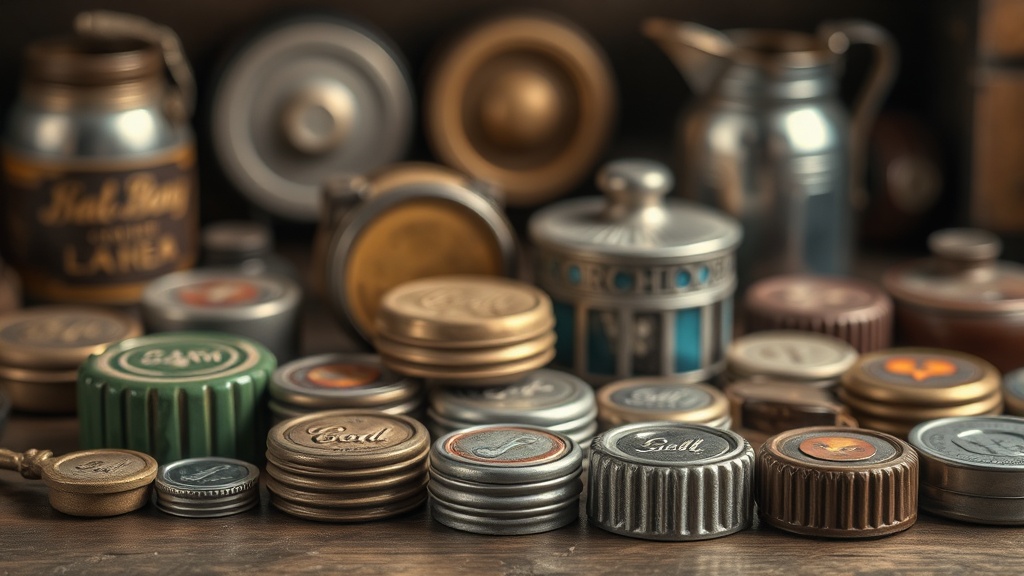
Preserving the Luster of Vintage Metal Caps and Small Collectibles

What You'll Learn About Metal Oxidation and Surface Care
You're about to learn how to manage the chemical reactions that affect vintage metal bottle caps, small metal tokens, and other small-scale collectibles. We'll cover the differences between controlled patina and destructive corrosion, how to identify various metal types, and the specific methods used to maintain surface integrity without destroying collector value. Understanding these processes is vital if you want your small finds to survive the decades ahead.
Metal is a reactive material. Whether it's a tin-plated steel bottle cap or a copper-alloy token, the environment dictates how that item looks. If you leave a metal piece in a humid basement, it'll change—often for the worse. But if you're a collector who loves a bit of aged character, you need to know the line between a "natural patina" and "active rust." One adds value; the other erases it.
How Do You Tell the Difference Between Patina and Corrosion?
Identifying the state of your metal items is the first step in any preservation plan. A patina is a thin, stable layer of oxidation that actually protects the underlying metal. Think of a bronze token that has turned a dull, dark brown. That's usually a stable patina. It doesn't flake, it doesn't smell, and it doesn't feel gritty. It's part of the item's history.
Corrosion, on the other hand, is an active, destructive process. If you see bubbling paint on a metal cap, or if a small metal object has a powdery, bright green substance (often called "bronze disease" in the community) on its surface, you're looking at a problem. This isn't just a change in color; it's the metal literally eating itself. If left unchecked, it will eventually turn the item into dust. Always check your items under a bright light—natural sunlight is best—to see if the surface is lifting or crumbling.
To keep track of your items, you might want to keep a simple log of when you last inspected them. A simple table can help you monitor the condition over time:
| Item Type | Metal Base | Current State | Action Taken |
|---|---|---|---|
| Crown Cap | Steel/Tin | Light surface rust | Dry wipe |
| Metal Token | Copper/Brass | Dark patina | None (Stable) |
| Small Box | Tin/Zinc | Active oxidation | Isolation |
If you're unsure about a specific reaction, checking resources like the American Journal of Conservation can provide deep technical insights into how different alloys behave in various environments. It's a great way to verify if what you're seeing is a standard aging process or a genuine threat.
Can Humidity Ruin Your Metal Collection?
Humidity is the silent killer of small metal collectibles. Water molecules in the air react with the metal surface to create oxidation. This is why a metal cap found in a damp attic looks much worse than one kept in a controlled room. High humidity levels accelerate the electrochemical process that leads to rust and pitting. Even if you aren't seeing visible rust, high moisture levels can cause "micro-pitting" that isn't easily seen without a jeweler's loupe.
To prevent this, you shouldn't just throw everything in a plastic bin and forget about it. A sealed bin can actually be a trap if there's moisture inside. Use silica gel packets (those little "Do Not Eat" packets) to absorb excess moisture. If you're storing metal bottle caps or small tokens, try to keep them in an environment where the relative humidity stays between 35% and 50%. Anything higher, and you're essentially inviting the air to attack your collection.
One trick I use is to keep a hygrometer (a device that measures humidity) in my storage area. It's a cheap tool, but it's much better than guessing. If you see the humidity spiking, it's time to check your storage containers. It's not just about the metal; it's about the environment surrounding it. A dry room is a safe room.
What Are the Best Ways to Clean Metal Without Loss of Value?
The golden rule of collecting is this: if you aren't sure, don't clean it. For many collectors, the "originality" of a metal piece is its most important trait. If you use an abrasive or a harsh chemical to make a vintage bottle cap shine like new, you might actually be stripping away the very things that prove its age and authenticity. You're essentially "cleaning away the history."
If you have a piece that is truly dirty—meaning it has actual grime or dirt, not just oxidation—start with the gentlest method possible. A soft-bristled brush and a tiny bit of distilled water is often enough. Avoid tap water if you can, as the minerals and chlorine in it can leave new deposits on the surface. If you're dealing with a very stubborn piece, you might look into professional guides from organizations like the Library of Congress, which often provides historical context on material sciences and preservation standards.
Avoid these common mistakes:
- Using Vinegar: While it's a popular "natural" cleaner, the acetic acid is incredibly aggressive and can etch the metal surface permanently.
- Steel Wool: This will leave microscopic scratches that make the item look much younger and less valuable.
- Chemical Dips: These are often too "all or nothing." They might make the metal shine, but they often strip the patina that collectors actually want to see.
If you're looking to display your items, consider using velvet-lined trays or specialized display cases. This keeps the metal from touching other surfaces that might cause scratches or chemical reactions. A well-organized collection is a protected collection. Don't just pile your finds in a drawer; give them a home where they can stay stable and look their best.