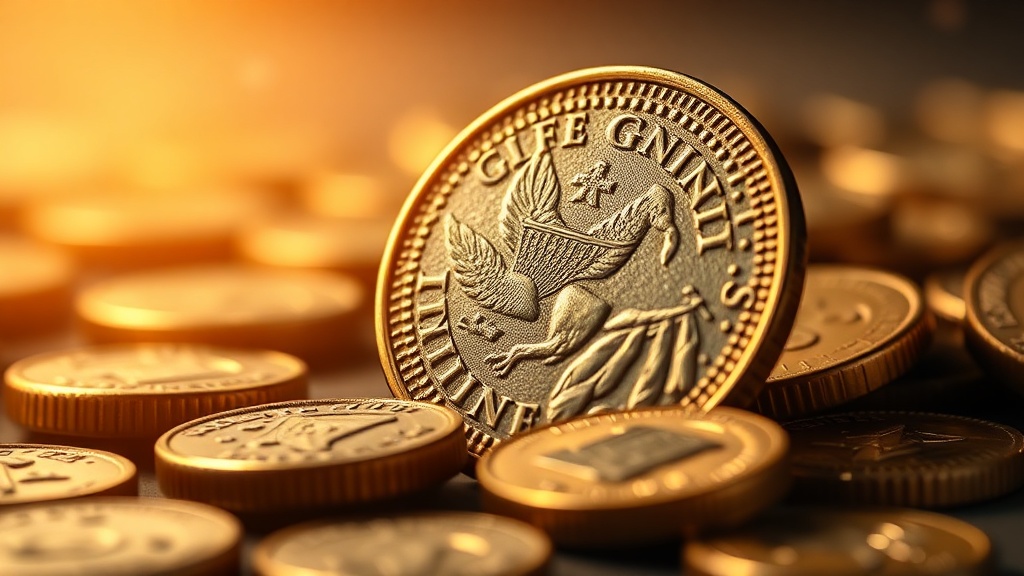
Preserving Your Coin's Legacy: Thoughtful Care Beyond the Polish

Preserving Your Coin's Legacy: Thoughtful Care Beyond the Polish
Many new coin collectors, with the best intentions, often believe that a dirty or tarnished coin simply needs a good cleaning to reveal its hidden beauty and, consequently, its inherent value. This common misconception can lead to irreversible damage, drastically reducing a coin's historical significance and monetary worth. This post will clarify why traditional cleaning methods are almost always detrimental to collectible coins and guide you through appropriate, safe preservation techniques that maintain—and even enhance—their long-term appeal and value.
Why do cleaning methods often devalue collectible coins?
The allure of a shiny, newly scrubbed coin is understandable. After all, we clean most things we own to restore them to their original glory. However, coins are different. Their surfaces carry a unique historical fingerprint—a patina that develops over decades or centuries of exposure to air, environment, and handling. This patina, often a subtle layer of oxidation or environmental deposits, is not dirt in the conventional sense. It's a testament to the coin's age and authenticity, a crucial element for serious collectors and graders.
When you attempt to clean a coin using abrasive methods—even a soft cloth, let alone polishes, chemical dips, or brushes—you aren't just removing superficial grime; you're often stripping away this protective and historically significant layer. The microscopic scratches left behind, known as 'hairlines,' are permanent. They refract light unevenly, giving the coin a unnaturally bright, 'cleaned' appearance that numismatists immediately recognize. Worse still, chemical dips can leave an unnatural sheen or residue that continues to damage the coin over time. These alterations fundamentally change the coin's original state, severely impacting its grade and market value. A coin with a natural, undisturbed surface, even if toned or slightly dirty, almost invariably fetches a higher price than a 'cleaned' counterpart.
What safe methods exist for protecting your coin collection long-term?
The goal isn't to make coins look new, but to prevent further deterioration and preserve them in their current state. This approach centers on proper handling, storage, and environmental control. First and foremost, always handle coins by their edges, minimizing contact with the obverse and reverse surfaces. The oils and acids from your skin can react with the metal, leaving behind permanent fingerprints that are incredibly difficult, if not impossible, to remove safely.
For storage, avoid PVC (polyvinyl chloride) flips or albums. PVC plasticizers can leach out over time, causing a sticky, greenish residue known as 'slime' that can severely corrode coins. Instead, opt for inert materials like Mylar (BoPET), polyethylene, or polypropylene. Archival-safe coin holders, such as Mylar flips, non-PVC plastic capsules, or slabbed holders from professional grading services (