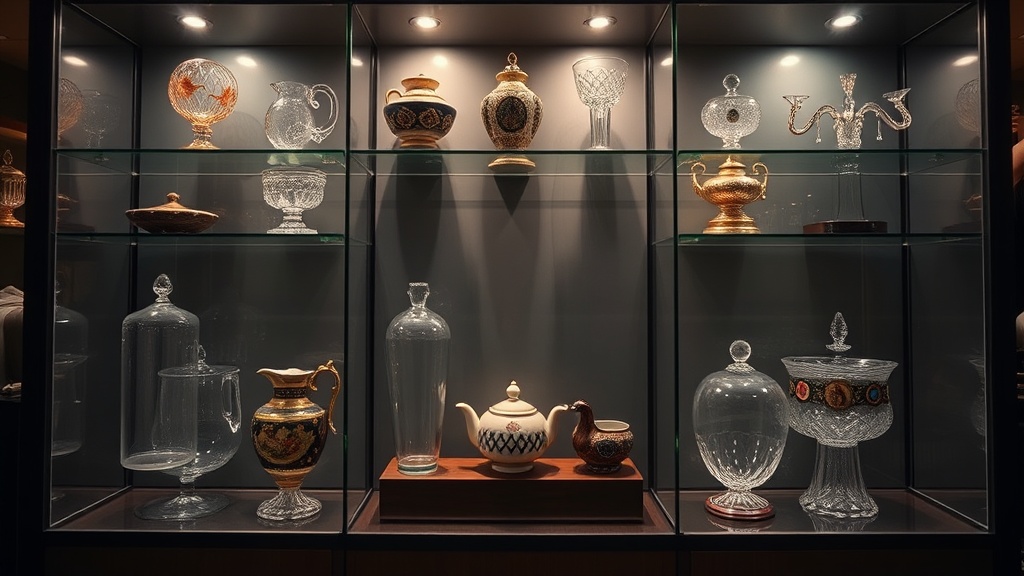
Selecting the Right Display Cases for Glass and Small Collectibles

The Invisible Guardian: Why Display Choice Matters
Did you know that even ambient humidity levels can cause microscopic fractures in certain types of vintage glass over time? Most collectors focus on the hunt, but the real work begins once the item is actually in your possession. This guide covers the specific methods for selecting, testing, and implementing display solutions for bottles, glass, and small collectibles. Choosing the wrong housing doesn't just look bad; it can actually accelerate the degradation of your most prized finds through light exposure or temperature swings.
A display case isn't just a box to hold things; it's a controlled environment. If you're displaying a collection of vintage soda bottles or delicate porcelain figures, you're dealing with physics. Gravity, light, and air quality are constant variables. You might think a simple wooden shelf is enough, but without proper planning, your collection is at the mercy of its surroundings. We'll look at how to match the material of your case to the specific needs of your items.
Is Acrylic or Glass Better for Small Collectibles?
One of the most frequent questions I hear involves the material of the enclosure itself. Should you go with high-end museum glass or a lightweight acrylic case? Both have pros and cons depending on what you're showing off. Acrylic is much more impact-resistant—which is great if you have kids or pets running around—and it's significantly lighter. However, it's prone to scratching and can yellow if it isn't high-grade. Glass, on the other hand, offers superior clarity and won't scratch easily, but it's heavy and fragile.
When you're looking at display cases for bottles, weight becomes a major factor. A heavy glass bottle needs a stable, non-slip base. If you use a flimsy acrylic stand, that bottle is a single accidental bump away from a catastrophic shatter. For smaller items like metal caps or tiny tokens, acrylic-based modular cases are often the way to go because they allow for quick reconfiguration as your collection grows. You can find more detailed technical specifications on material durability via the National Institute of Standards and Technology, which tracks various material properties.
Here is a quick comparison to help you decide:
| Feature | Acrylic Cases | Glass Cases |
|---|---|---|
| Durability | High (Impact Resistant) | Low (Brittle) |
| Clarity | Good (May Yellow) | Excellent (Permanent) |
| Weight | Lightweight | Heavy |
| Scratch Resistance | Low | High |
How Do You Protect Bottles from UV Damage?
Light is the silent killer of many collectibles. While glass bottles are generally hardy, the labels or any painted-on decorations can fade rapidly when exposed to sunlight. If you're displaying a collection of antique medicine bottles or colorful glass-blown pieces, you need to consider your light source. UV rays break down chemical bonds in pigments, leading to permanent discoloration. A display case with built-in UV protection is a smart investment, but it's not a silver bullet.
If you're displaying items near a window, even if they are inside a case, you're still at risk. I always recommend using LED lighting rather than traditional incandescent bulbs. LEDs produce much less heat and almost no UV radiation, making them much safer for your collection. You can check the light spectrum requirements for various materials through resources like the U.S. Department of Energy to understand how light affects different surfaces. If you can't change the lighting, a UV-coated acrylic case provides a secondary line of defense.
Where Should You Place Your Display Cabinets?
Location is everything. A common mistake is placing a beautiful collection in a room that experiences high temperature swings, like a sunroom or a kitchen near a stove. Rapid changes in temperature cause materials to expand and contract. For glass collectors, this can lead to thermal shock. If a bottle is cold and the room suddenly warms up significantly, the stress can cause a crack. Similarly, metal caps or small tin items can react to humidity changes in a poorly ventilated room.
Ideally, your display should be in a room with stable environmental conditions. A study room or a dedicated hobby room is usually much better than a living area with high foot traffic. If you're using a cabinet with doors, ensure the seal is tight enough to keep dust out, but not so airtight that moisture gets trapped inside. Dust isn't just an aesthetic issue; it can hold moisture against the surface of your items, leading to unwanted buildup or even corrosion on metal components. Always leave a little breathing room for your items.
When setting up your display, think about the "visual weight" of the items. A heavy, dark-colored bottle should be the anchor, while lighter, smaller items can be grouped around it. Don't crowd your items too closely together. If a single item falls or shifts, you don't want a domino effect that takes down the entire display. Space them out, use small acrylic risers to create depth, and always check the stability of your base before you walk away. A well-planned display is a testament to the collector's respect for the object.