Spotting Authentic Vintage Bottle Variations and Marks

The hidden language of glass and ceramic
Did you know that a single bubble in a glass bottle—something most people would call a defect—can actually be the primary way collectors distinguish between a mass-produced piece and a hand-blown antique? In the world of bottle collecting, what looks like a flaw is often a signature of age. Understanding these nuances is the difference between owning a common piece of yard junk and a legitimate historical artifact. This guide covers the physical markers, manufacturing marks, and structural quirks that define authentic vintage bottles and small-scale ceramics.
When you're looking at a collection of old glass, you aren't just looking at a vessel; you're looking at a timeline of industrial progress. Before the mid-1800s, glass was a much more temperamental medium. If you see a bottle with a heavy, uneven rim or a base that isn't perfectly flat, your excitement should increase. These aren't mistakes; they are evidence of the era's technology. We'll look at how to spot the difference between a genuine antique and a modern reproduction that tries too hard to look old.
How do I identify the age of a glass bottle?
The most reliable way to date a bottle is to look at the finish—that's the top part of the bottle where the cap goes. Before the invention of the machine-made screw cap, bottles had several distinct types of finishes. For example, a "crown finish" is a telltale sign of a more modern, automated era, whereas a "ground glass stopper" suggests an older, more expensive production method. If you see a "pontil mark" on the bottom, you're likely looking at a hand-blown piece. A pontil mark is a rough, scarred area left behind when the glass-blowing rod (the pontil) was broken off from the base.
Another way to check age is by examining the seams. If a bottle has a seam that runs all the way up the neck and over the top, it was likely made using a mold-blown process. If the seam stops before the lip, it indicates an older method. You can research more about historical glass production methods through resources like the Smithsonian Institution to understand the evolution of these techniques. It's a slow process of elimination, but the more you look, the more the glass starts to speak to you.
What are the signs of a modern reproduction?
Reproduction artists are getting better, but they often leave clues. One of the biggest giveaways is the weight and the uniformity. Modern glass is almost too perfect. If you find a "vintage" bottle that feels incredibly light or has a perfectly smooth, consistent texture across the entire surface, be skeptical. True antique bottles often have "straw marks"—thin, elongated bubbles inside the glass—or slight discolorations caused by impurities in the sand used during production. These impurities were common in the 19th century but are largely non-existent in modern high-clarity glass.
Check the base of the bottle under a bright light. Modern machine-made bottles often have a circular ring or a very precise, machine-stamped mold number. Authentic antique bottles often have a much rougher, less predictable base. If the bottle looks like it was plucked straight from a modern factory-made line, it probably was. Collectors often use a high-powered loupe to check for these minute details. Even a small-scale ceramic piece will show signs of hand-tooling or uneven glazing if it's truly old. If the glaze is perfectly even and shows no signs of crazing (that fine web of tiny cracks), it might be a newer piece.
Why does the color of the glass matter?
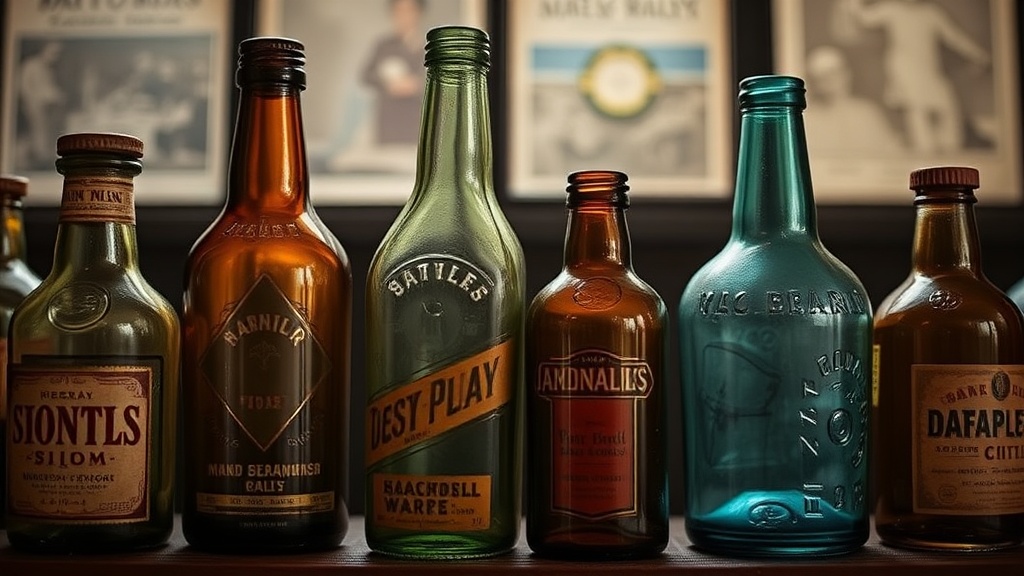
Color is a major indicator of both the era and the intended use of the bottle. For instance, certain shades of cobalt blue or deep amber were highly popular for medicinal or chemical storage in the late 1800s. However, color isn't just about aesthetics; it's about the chemistry of the time. The presence of certain metals in the glass-making process created specific hues. A deep green, often called "aqua," is very common in mid-19th-century bottles. This color often results from iron impurities in the sand used to make the glass.
When you're out in the field or at an auction, don't just look for the color; look for the depth. Older glass tends to have a certain depth and "soul" that modern colored glass lacks. The color is often part of the glass itself, not just a coating. This is particularly true for glass-blown items. If you're interested in the chemical composition of historical glass, the American Chemical Society provides great context on how different elements influenced the colors of historical materials. Understanding this helps you realize that a "flaw" in color or clarity is actually a mark of authenticity.
How can I preserve the condition of my finds?
Once you've identified a piece, you need to protect it. Glass is surprisingly fragile, especially when it's old. Thermal shock is a real threat—moving a bottle from a cold garage to a warm living room too quickly can cause it to crack. Always handle your pieces with clean, dry hands. While it's tempting to try and scrub a dirty bottle, be extremely careful with old glass. Acidic residues or heavy minerals can sometimes be part of the piece's history, and aggressive cleaning can strip away a patina that collectors value. If you must clean a piece, use lukewarm water and a very soft cloth. Avoid any harsh chemicals that could react with the glass or any ceramic glazes.
For display, avoid direct sunlight. UV rays can cause certain colors to fade or even change over long periods, and heat can lead to expansion and contraction issues. Use stable, vibration-free shelving to prevent any accidental tips. A heavy, stable base for your display is a simple way to ensure your collection stays safe. Whether it's a small ceramic jug or a tall, elegant glass flask, the goal is to keep the environment as neutral and stable as possible.
| Feature | Antique Characteristic | Modern/Reproduction Characteristic |
|---|---|---|
| Base | Pontil mark or unevenness | Smooth, circular, or machine-stamped |
| Seams | May stop before the lip | Often runs all the way over the top |
| Bubbles | Common (straw marks/elongated) | Rare or very uniform/small |
| Texture | Slightly irregular/hand-made feel | Perfectly smooth and consistent |