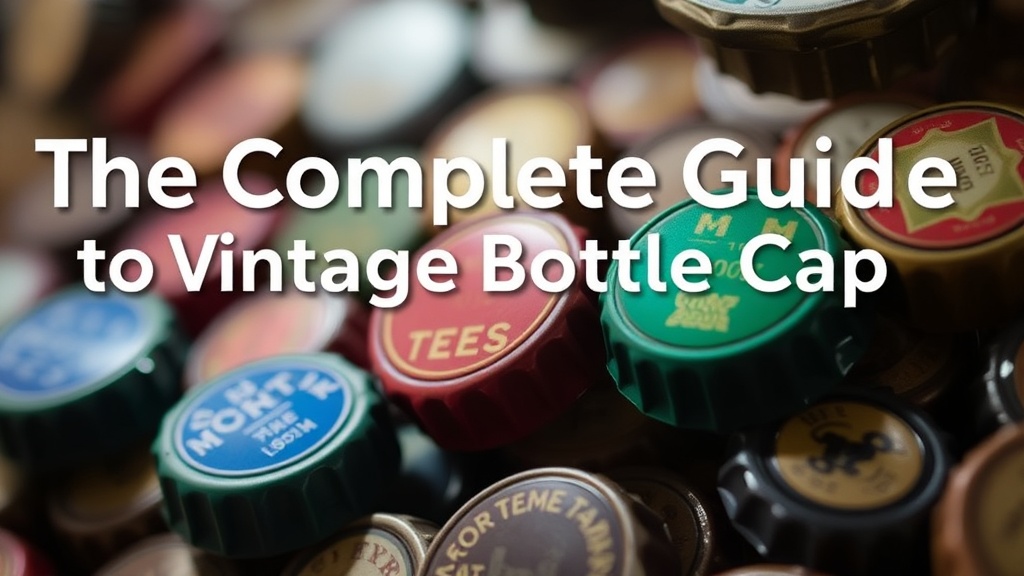
The Complete Guide to Vintage Bottle Cap Collecting in 2024

This guide covers everything needed to start or expand a vintage bottle cap collection in 2024 — from identifying rare finds and spotting valuable variants to proper storage methods and where to hunt for hidden gems. Whether sorting through a shoebox of old caps from a grandparent's basement or hunting for that elusive 1950s Coca-Cola cork-lined crown, the information here will save time, money, and frustration.
What Makes a Bottle Cap "Vintage" and Worth Collecting?
A bottle cap becomes "vintage" once it hits roughly 30 years old — so anything from 1994 or earlier qualifies. The catch? Age alone doesn't equal value. Collectors chase caps with specific traits: pre-1960s cork-lined crowns, early plastic liners, unique artwork, limited regional brands, or caps from defunct breweries and soda companies.
The most sought-after vintage caps fall into distinct categories. Pre-1960s cork-lined crowns represent the golden age of bottle capping — these featured a cork disc inside a metal crown to create a seal. When plastic liners replaced cork in the early 1960s, the game changed. Some collectors specialize entirely in William Painter's original 1892 design — the crown cork that started it all.
Here's the thing: condition matters enormously. A pristine 1950s Pepsi cap might fetch $15-25. The same cap with dents, rust, or faded paint? Two dollars — if that. Serious collectors grade caps on a scale similar to coins, from "Mint" (perfect) down to "Poor" (barely identifiable). Most hobbyists aim for "Very Fine" or better — crisp edges, readable text, colors still vibrant.
Provenance adds intrigue. A cap from a specific brewery that operated for only three years in rural Saskatchewan carries more storytelling weight than a generic mass-produced cap from a national brand. Regional variations — different colors for different cities, holiday editions, promotional tie-ins — create micro-categories that dedicated collectors obsess over.
How Do You Identify Rare and Valuable Bottle Caps?
Identifying valuable bottle caps requires examining three elements: the liner material, the brand and era, and any manufacturing anomalies or variations.
Start with the liner. Flip the cap over. See cork? That's pre-1960s — instant collectibility. Spot a Sta-Tab or Super Seal logo embossed on the underside? Those indicate specific manufacturers and date ranges. The Brewery History Society maintains excellent resources for dating caps by their physical characteristics.
Next, examine the artwork. Early caps were simple — brand name, maybe a city. By the 1940s and 50s, elaborate designs emerged: fishing scenes, sports themes, cartoon characters, patriotic imagery. Some of the most valuable caps feature Disney characters from 1950s promotional soda bottles — these can command $50-200 depending on condition and rarity.
Military caps form another premium category. World War II-era caps with patriotic slogans, or caps specifically produced for military bases, carry significant premiums. So do prohibition-era "near beer" caps — a quirky footnote in American beverage history that collectors love.
The table below breaks down common cap types and their typical market values in 2024:
| Cap Type | Era | Typical Value Range | Rarity Notes |
|---|---|---|---|
| Common mass-market (Coke, Pepsi, Budweiser) | 1960s-1990s | $0.50 - $3 | Millions produced; condition-dependent |
| Cork-lined crowns | Pre-1960 | $5 - $50 | Earlier = pricier; regional brands command premiums |
| Regional breweries (defunct) | Any | $10 - $100+ | Scarcity drives value; documentation helps |
| Disney/sports promotional | 1950s-1970s | $25 - $300 | Character caps most valuable; team logos vary by market |
| Prohibition-era near beer | 1920-1933 | $15 - $75 | Historical significance adds collector interest |
| Foreign/export brands | Any | $3 - $40 | Exotic locations popular; European caps especially hot |
Worth noting: errors and variations create hidden value. A cap with inverted colors, a misspelled brand name, or a double-struck design might look like damage to the untrained eye — but to collectors, these are treasures. Always compare suspected errors against documented examples before celebrating.
Where Can You Find Vintage Bottle Cap Collections in 2024?
Vintage bottle caps surface in four main hunting grounds: estate sales and auctions, antique shops and flea markets, online marketplaces, and — for the adventurous — old dump sites and construction dig areas.
Estate sales remain the holy grail. Winnipeg and surrounding areas (Haruki's home turf) regularly see collections surface when older collectors downsize or estates clear out. The key is arriving early — serious buyers line up before doors open. Bring a loupe, a flashlight, and cash. Don't dismiss partial collections in shoeboxes or old coffee cans; sometimes the best caps hide in unsorted lots.
Antique shops vary wildly. Some dealers understand cap values and price accordingly. Others treat them as "bottle accessories" and underprice rarities. The best deals come from shops that acquired entire estate collections and haven't sorted through everything yet.
Online, eBay dominates but requires caution. Search terms matter — "vintage bottle cap lot" yields different results than "crown cork collection" or "soda cap vintage." Facebook Marketplace and Kijiji (popular in Canada) occasionally surprise with local finds. That said, shipping costs add up fast for heavy metal lots.
The Society of Crown Cork Collectors organizes annual conventions where trading happens face-to-face. These events — typically in the US but worth the trip for serious collectors — feature dealers with inventory that never hits the internet.
For the truly dedicated, old dump sites and construction areas where historic buildings once stood can yield "dug" caps. These require cleaning (and patience) but offer authentic period pieces at the cost of effort rather than dollars. Always secure proper permissions before digging — trespassing isn't worth a rusty Pepsi cap.
What Are the Best Ways to Store and Display Bottle Cap Collections?
Proper storage prevents the three deadly enemies of metal caps: moisture, oxidation, and physical damage.
For active collections, 2x2 cardboard coin holders work beautifully — they're cheap, standardized, and fit most caps snugly. Slide them into three-ring binder pages for easy browsing. The Whitman Publishing brand produces sturdy holders that won't degrade over time.
Here's the thing about plastic — not all of it helps. PVC-based containers or flips can cause "green slime" corrosion on metal over years. Look for "PVC-free" or "archival quality" labels on any plastic storage. Mylar sleeves, while pricier, offer the best protection for truly valuable pieces.
Display options range from utilitarian to artistic. Shadow boxes with glass fronts showcase themed collections (all fishing caps, all caps from a specific state, all 1950s designs) while protecting from dust. Some collectors mount caps on wooden boards with recessed holes — attractive for wall display, though less protective.
That said, never store caps in direct sunlight. Fading happens gradually then suddenly — one summer of window light can destroy decades of color integrity. Basements and attics present humidity risks. Climate-controlled spaces work best; at minimum, add silica gel packets to storage containers and check periodically.
For high-value specimens, individual capsule cases — the kind used for rare coins — offer maximum protection. These run $1-3 each, so reserve them for caps worth $50+. Label everything. Future you (or your heirs) will thank present you for documenting where each cap came from and why it matters.
How Much Should You Pay for Vintage Bottle Caps?
Prices range from pocket change to hundreds of dollars, with most collector-grade caps falling between $2 and $25.
Common 1960s-80s mass-market caps — think Coke, Pepsi, mainstream American beers — typically sell for $1-5 depending on condition. These form the backbone of many collections but rarely appreciate dramatically. They're perfect for learning grading standards and building initial inventory without significant investment.
The catch? Regional and foreign caps break this pattern. A cap from a small Manitoba brewery that operated only during the 1940s might command $40-80 from the right buyer. Japanese beer caps from the 1960s and 70s have developed a strong following — some sell for $30-60 routinely.
Complete sets carry premiums. A full run of 1950s Squirt soda caps (they issued different colors and designs) might cost $200-300 as a curated collection — far more than the sum of individual pieces. Provenance matters; caps with documented history (from a specific closed brewery, collected during documented travels) justify higher prices.
Condition remains the ultimate price driver. Two identical 1940s cork-lined caps might differ 10x in value based solely on rust spots, edge dings, or faded paint. Learn to grade conservatively — overgrading purchases leads to disappointment, while undergrading sales leaves money on the table.
The bottle cap collecting community remains remarkably accessible financially. Unlike rare coins or stamps where entry-level purchases start at hundreds of dollars, beautiful vintage caps exist at every price point. Start with $50 and a sharp eye at flea markets, and a respectable collection emerges within months. The hunt — sorting through bins, spotting that one cork-lined crown among hundreds of modern crimp seals — delivers satisfaction that has nothing to do with investment value.