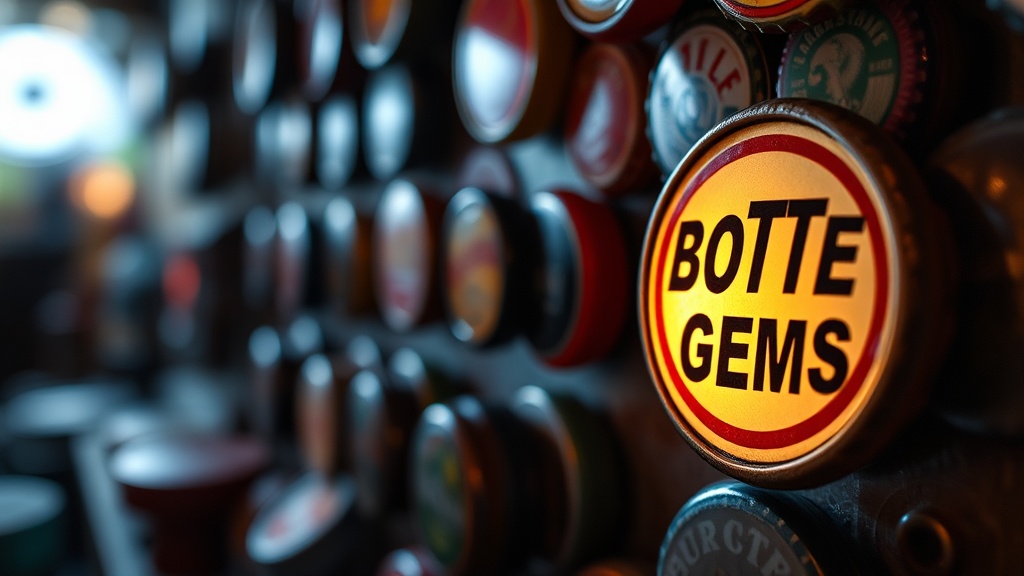
Top 5 Hidden Gems in Bottle Cap Collecting Worth Hunting

Coca-Cola Christmas Themed Caps (1950s-1960s)
Pepsi Mickey Mouse Club Promotional Caps
Regional Soda Brand Cork-Lined Caps
Military Base Exchange Exclusive Caps
Olympics and World's Fair Commemorative Caps
What Makes a Bottle Cap Valuable to Collectors?
Not all bottle caps deserve a spot in your collection. The real value lies in scarcity, condition, and the stories behind the brands. This guide breaks down five overlooked categories that experienced collectors actively seek—and where to find them before the competition catches on. Whether you're building a display case or hunting for trade bait at the next Winnipeg swap meet, these hidden gems offer genuine upside.
Are Early Coca-Cola Cork Caps Worth the Investment?
Yes—especially those minted between 1940 and 1955 with city names stamped underneath.
The Coca-Cola Company produced millions of cork-lined caps during the mid-20th century. Most collectors gravitate toward the common red-and-white script designs. They're everywhere. What they miss—the "crown jewels" of this category—are the regional variants bearing town names like "Winnipeg," "Saskatoon," or "Fargo."
Here's the thing: these localized caps were produced in smaller batches for specific bottling plants. When a plant closed, the caps often disappeared into attics, basements, and estate sales. Condition matters enormously. A "Winnipeg" cork cap in near-mint condition fetches $40–$75 at auction. The same cap with rust spots or bent edges? Maybe $8.
The catch? Reproductions exist. Study the underside—the genuine article has a distinct two-piece construction with visible cork residue. Modern reproductions use synthetic liners and feel lighter in hand. Worth noting: Coca-Cola didn't produce cork caps after 1964. Anything dated later is suspect.
Where to Find Them
- Estate sales in former bottling towns (Winnipeg's Exchange District, Fargo's downtown corridor)
- Local auction houses that don't specialize in collectibles
- Facebook Marketplace listings from sellers clearing out grandparents' basements
- The Brewery Collectibles Club of America trading forums
Which Foreign Beer Caps Offer the Best Return?
Eastern European and Southeast Asian caps from defunct breweries consistently outperform domestic finds.
Collectors in North America often overlook beer caps from Poland, Czechoslovakia, Vietnam, and Thailand. Big mistake. The fall of communism shuttered hundreds of state-run breweries across Eastern Europe. Their caps—often featuring bold socialist iconography, wheat sheaves, or Cyrillic lettering—aren't being reproduced. Once they're gone, they're gone.
Vietnamese beer caps tell a different story. Brands like "33 Export," "Bia Hanoi," and "Saigon Export" exploded during the 1990s economic boom. Early caps from this era feature hand-painted designs and irregular printing. They're imperfect. That's precisely why collectors want them.
That said, condition is trickier with foreign caps. Shipping damage, humidity exposure, and poor storage practices plague this category. Target caps with intact liners and minimal edge wear. The sweet spot? Pre-2000 caps from breweries that no longer exist.
| Region | Scarcity Level | Avg. Value (USD) | Best Hunting Grounds |
|---|---|---|---|
| Eastern Europe (pre-1990) | High | $15–$45 | eBay.de, Polish auction sites |
| Southeast Asia (1980s–1990s) | Medium-High | $8–$25 | Asian grocery stores, import shops |
| Latin America (defunct brands) | Medium | $5–$18 | Flea markets, estate sales |
| Africa (pre-2000) | Very High | $20–$60 | Specialty dealers, collector conventions |
Can Modern Craft Brewery Caps Actually Be Rare?
Absolutely—limited releases and collaboration caps from small-batch operations are sleeper hits.
The craft beer explosion created thousands of microbreweries. Most produced generic caps with forgettable designs. A few—the smart ones—commissioned custom artwork, numbered their releases, or created caps specifically for beer festivals.
Take Toppling Goliath Brewing from Decorah, Iowa. Their "Pseudo Sue" pale ale caps are common. But the 2015 "Assassin" release? Only 300 caps existed. Today, that cap trades for $80–$120 among serious collectors. Tree House Brewing in Massachusetts follows a similar pattern—standard releases are dime-a-dozen, but anniversary caps with holographic finishes command premiums.
The strategy here is watching brewery announcements like a hawk. Follow Instagram accounts, join brewery email lists, and (this is key) attend can releases in person. Collectors who showed up at Other Half Brewing's Brooklyn location during their 2017 Green City release walked away with caps now worth $25–$40 each.
"The best time to collect a craft cap is during the release week. The second-best time is five years later when everyone else realizes they threw theirs away."
Worth noting: craft breweries close constantly. When Green Flash Brewing shuttered its Virginia Beach operation in 2019, their "West Coast IPA" caps tripled in value within six months. It's grim, but defunct brewery caps always spike.
What About Promotional and Event-Specific Caps?
These are the most overlooked category—corporate giveaways, sports sponsorships, and festival commemoratives that collectors dismiss as "junk."
Companies love putting their logos on bottle caps. Most of these promotions run for weeks, not years. The 1986 Pepsi "Million Dollar Cap" contest produced limited-edition gold caps. Winners cashed in. Losers tossed them. Today, uncashed promotional caps from that era sell for $30–$50 on the secondary market.
Sports sponsorships tell a similar story. When Labatt sponsored the Toronto Blue Jays during their 1992 World Series run, they produced commemorative caps featuring the team logo. Most wound up in recycling bins. The survivors—especially those with intact liner text—now trade among baseball memorabilia collectors for $15–$35.
Here's the thing: promotional caps rarely look special at first glance. They're often printed on standard stock with minimal design variation. The difference lies in the text—look for date stamps, limited edition numbers, or "not for resale" markings. These indicate short production runs.
The Crown Collectors Club maintains a database of known promotional series. Worth checking before dismissing that generic-looking Miller Lite cap.
Are Soda Caps from Regional Brands Worth Collecting?
Yes—regional soda brands produced some of the most visually striking caps in the hobby, often at prices well below their national counterparts.
Everyone recognizes Pepsi and Coca-Cola. But what about Tom Tucker ginger ale from Pittsburgh? Ski Citrus from Kentucky? Red Ribbon root beer from Winnipeg? These regional sodas operated on razor-thin margins with minimal advertising budgets. Their caps had to pop visually—neon colors, unusual shapes, foil accents.
The scarcity factor is immense. A regional soda might serve only three counties. When the bottler closed, the caps vanished. Nehi (famous for grape soda) produced thousands of variants across different bottling territories. Collectors who specialize in Nehi caps can spend decades hunting specific color combinations.
The catch? Documentation is spotty. Regional brands rarely kept production records. Provenance becomes crucial. Caps sourced directly from former bottling employees—or their descendants—carry authenticity that random eBay lots lack.
That said, pricing remains reasonable. While a 1950s Coca-Cola cap might cost $20, an equally scarce Dr. Nut (New Orleans-based) or Cheerwine (Carolina staple) cap often sells for $8–$12. The value proposition is obvious.
Quick Reference: 5 Hidden Gem Categories
- City-stamped Coca-Cola cork caps (1940–1955) — Regional specificity drives value. Winnipeg, Fargo, and Saskatoon examples lead the pack.
- Defunct Eastern European brewery caps — Socialist-era designs from closed state breweries. Czech and Polish examples show strong appreciation.
- Limited craft brewery releases — Anniversary editions, collaboration caps, and festival exclusives from breweries like Toppling Goliath and Tree House.
- Promotional and event caps — Corporate contests, sports sponsorships, and commemorative series with limited production windows.
- Regional soda brand caps — Neon, unusual designs from defunct local bottlers. Better visuals than national brands at fraction of the cost.
Happy hunting.