What Antique Bottle Colors Reveal About Age, Contents, and Collector Value

Why Are Some Antique Bottle Colors Worth Thousands While Others Sell for Pocket Change?
A single 19th-century cobalt blue "poison" bottle with embossed lettering can command prices exceeding $8,000 at auction—while an equally aged clear glass bottle from the same era might struggle to fetch $20. The difference? Nothing more than the sand and mineral additives that glassblowers melted into the batch over a century ago.
This guide breaks down what antique bottle colors actually indicate about origin, purpose, and current market value. You'll learn which hues signal collector gold, which ones barely warrant shelf space, and why that "purple" bottle in your display case might have started life as completely clear glass.
What Makes Certain Colors So Much More Valuable to Collectors?
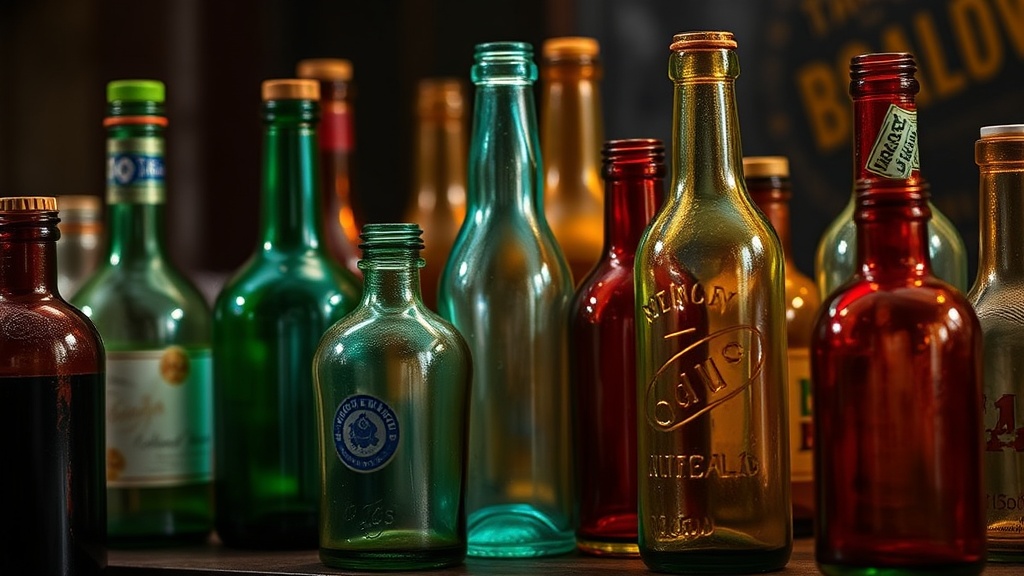
The value equation for colored glass starts with chemistry and ends with scarcity. Before automated manufacturing took over in the 1920s, every bottle color required specific mineral additives—cobalt for blue, manganese for amethyst, chromium for green, gold for cranberry red. These materials weren't cheap, and glasshouses didn't add them for aesthetic whimsy alone.
Amber glass dominated the beer and ale market because its iron and sulfur content blocked ultraviolet light—preserving hops and preventing spoilage. You'll find amber bottles by the thousands at estate sales and flea markets. But finding that same bottle in cobalt blue? That's where collectors start paying serious attention. Blue glass required expensive cobalt oxide, and manufacturers reserved it for products needing visual distinction—poisons, milk of magnesia, and certain patent medicines that demanded caution.
The rarity factor compounds when you consider breakage rates. Colored glass bottles often held dangerous substances. They got buried deeper, handled more carefully, or deliberately discarded in ways that led to breakage. Survivorship bias means the colored examples that reach today's market represent a tiny fraction of original production runs.
Condition matters, but color drives initial interest. A common amber beer bottle in pristine condition might sell for $15-30. The same bottle in teal green jumps to the $200-400 range. Switch to cobalt blue with original label, and you're looking at $800-1,500 depending on embossing quality. The color premium isn't arbitrary—it reflects genuine scarcity and the fascinating industrial history behind each shade.
Can You Actually Date Bottles by Their Color?
Here's where many collectors stumble. Color provides clues, not certainties. Amber wasn't just one color—it was a spectrum ranging from straw yellow to deep chocolate brown. Lighter ambers typically indicate earlier production (pre-1870s) or lower-quality glass batches. The deep, almost black amber you see in many whiskey bottles emerged later as glasshouses refined their additive formulas and standardized their recipes.
The shade also reveals content chemistry. Bitters and tonic bottles often appear in lighter amber because their alcohol content didn't require maximum UV protection. Beer and ale demanded darker shades for preservation. Pickle bottles? Usually lighter amber or olive green—pickling brine didn't degrade under light the way organic compounds did, so manufacturers saved money on expensive colorants.
Practical collectors use amber variations as rough dating tools. A whiskey flask in yellow amber likely predates 1860. The same form in dark amber probably comes from the 1880-1910 period. These aren't hard rules—regional glasshouses used different sand sources that naturally tinted their output—but they provide useful reference points when other dating evidence (mold seams, base marks) proves ambiguous.
Clear glass presents its own dating challenges. It seems modern, right? Actually, lead glassmakers produced crystal-clear containers as early as the 1700s. The difference lies in production volume. Clear glass required purer silica and more refined manufacturing—expensive propositions before mechanization made consistency affordable.
By the 1890s, clear glass dominated the patent medicine and food preservation markets. Consumers wanted to see contents—verify purity, check fill levels, admire product color. But don't assume every clear bottle dates to the 20th century. Early clear glass often shows a faint straw tint, slight waviness, or tiny bubbles—telltale signs of hand-blown origins that distinguish it from machine-made descendants.
What's the Story Behind Purple and Blue Bottles?
The reverse assumption about color causes equal trouble for beginners. Purple or amethyst glass wasn't originally produced in that color. Clear glass containing manganese dioxide slowly turns lavender or deep purple when exposed to UV light over decades. A bottle that left the factory crystal clear in 1890 might appear distinctly purple today after 130 years of sunlight exposure.
This solarization process creates "desirable" color that collectors pay premiums for—completely altering the original appearance. Some collectors specialize in these "sun-colored amethyst" pieces, paying extra for deep, even toning that proves decades of authentic aging. Others prefer the original clear state and avoid purpled examples. Neither preference is wrong, but understanding the transformation matters when you're negotiating prices.
Cobalt blue, on the other hand, was always intentional. It screamed "poison" to a largely illiterate 19th-century population. The Smithsonian Institution maintains extensive collections documenting how glasshouses standardized this warning shade across competing manufacturers. Emerald green (chrome oxide) appeared in mineral waters, certain wines, and luxury food products. The color suggested natural purity—forest associations, spring water imagery—and it cost significantly more to produce than amber, making it a premium packaging choice.
Collectors prize these colors for several reasons. First, visibility—a cobalt bottle catches light and attention in ways amber never manages. Second, association with specific product categories that collectors specialize in. Third, the simple economics of scarcity. Manufacturers reserved these colors for specific uses, creating artificial rarity that persists in today's market.
How Did Manufacturing Changes Eliminate Color Variety?
The Owens Automatic Bottle Machine, introduced in 1903, changed everything about glass color. Before automation, glassblowers worked in small teams, mixing batches by hand, adding colorants based on customer orders. Each run might produce 500-1,000 bottles with slight variations that modern collectors treasure. After automation, factories optimized for speed and consistency—variables that colorful glass didn't accommodate well.
Standardized amber satisfied beer brewers. Clear glass dominated food products. The weird, wonderful variations—teal, emerald, cobalt, milk glass—became economic liabilities. Why pay extra for color when consumers no longer needed visual warnings or luxury associations to distinguish products?
Prohibition (1920-1933) accelerated the trend toward boring glass. Beer bottle production plummeted. Amber glass factories converted to clear container production for juices, sodas, and legal products. When beer returned after repeal, brown bottles had become the industry standard—cheaper to produce than true amber, nearly as effective at UV blocking, and perfectly suited to automated production lines.
Today's collectors hunt the transition period (1900-1920) obsessively. This era produced machine-made bottles in unusual colors—hybrids of hand-crafted aesthetics and factory precision. They're recognizable by uniform color combined with machine marks (seams, Owens rings on bases). These transitional pieces often command the highest premiums because they represent the last gasp of colorful mass production.
When you're hunting bottles at flea markets or estate sales, carry a small LED flashlight. Hold it against the base—quality colored glass transmits light differently than modern reproductions. Original cobalt glows distinctly; modern cobalt-tinted glass looks flat and opaque. Check thickness too. Hand-blown colored bottles show irregular wall thickness—thicker at the base, thinner toward the lip. Machine-made examples maintain uniform thickness throughout. This distinction matters enormously for dating and valuation.
Don't overlook "sick" glass, either. Some colored bottles develop interior clouding or surface iridescence from decades buried in alkaline soil. While collectors once dismissed these as damaged, many now prize the rainbow patina as historical evidence of authentic burial. A cobalt poison bottle with heavy iridescence might command higher prices than a pristine example—the patina proves age and history in ways that perfect glass cannot.
For serious collectors, standardized terminology matters. The Society for Historical Archaeology's bottle reference provides detailed color classifications that help buyers and sellers communicate accurately. "Amber" and "amberina" describe different things, and pricing varies accordingly. Knowing these distinctions separates informed collectors from casual pickers.
The market continues evolving in surprising ways. Colors that were common thirty years ago—deep olive green, for instance—have become scarce as collections mature and bottles enter permanent private holdings. Meanwhile, once-ignored shades like "black glass" (actually very dark olive or amber) have surged in popularity among whiskey collectors who appreciate the dramatic presentation.
Understanding these color dynamics transforms bottle collecting from lucky accidents into informed hunting. You're not just grabbing pretty glass—you're reading industrial history through mineral composition and manufacturing choices that span centuries. That amber bottle in your hand isn't just brown; it's a chemical solution to a biological problem (spoiling beer), created by workers who understood UV light damage decades before scientists explained the mechanism.
Whether you're specializing in pharmaceutical cobalt, beer amber, or the wild color variations of early mineral water bottles, remember that color tells a story. Your job as a collector isn't just accumulating objects—it's preserving and interpreting the material evidence of how our ancestors packaged, sold, and consumed the products of their daily lives.