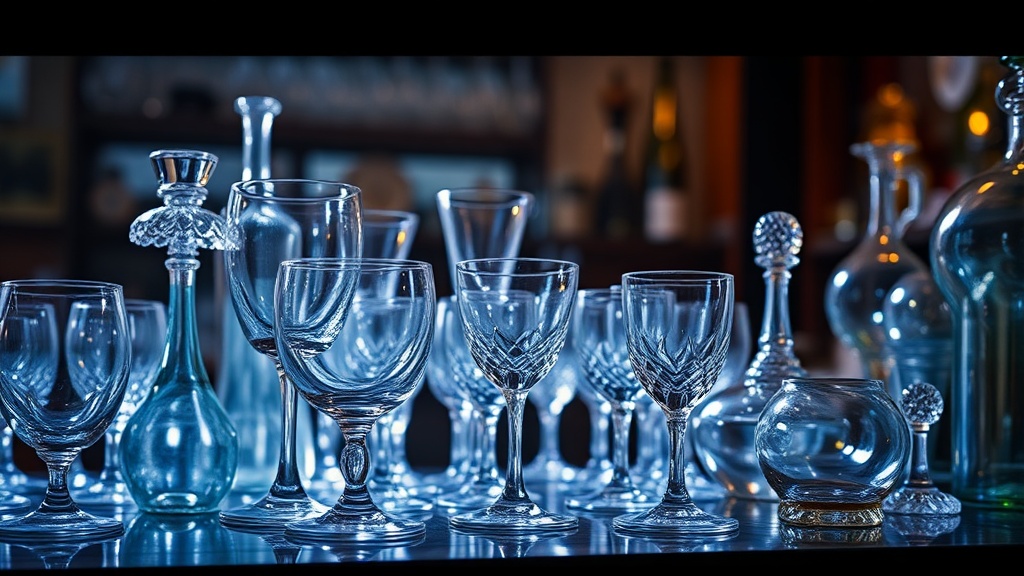
Protecting Your Glass Collection from Environmental Damage

A single degree shift in temperature or a 5% change in humidity can trigger irreversible chemical reactions in antique glass. This guide covers the specific environmental threats to bottles, glass-based collectibles, and small-scale glass artifacts, providing practical methods to prevent deterioration. You'll learn how to manage light exposure, moisture levels, and physical stability to keep your collection in top condition.
Glass isn't as indestructible as most people think. While it doesn't rust like a coin or rot like a textile, it suffers from "glass disease" or crizzling—a chemical instability caused by an imbalance in the alkali content. If you aren't careful, your prize piece can literally flake away or develop a cloudy surface that ruins its value.
How Does Humidity Affect Antique Glass?
High humidity levels can cause moisture to interact with unstable glass compositions, leading to surface pitting or a cloudy appearance. While glass is generally non-porous, the salts and impurities within the glass itself react to water vapor in the air. This is especially true for certain types of antique soda-lime glass or hand-blown bottles.
If you keep your collection in a basement or a damp garage, you're asking for trouble. Moisture doesn't just sit on the surface; it can seep into tiny microscopic cracks. This leads to a phenomenon called weeping, where the glass appears to "sweat." It's a bad sign.
To keep things stable, aim for a consistent relative humidity (RH) between 40% and 50%. You don't need a laboratory-grade climate control system, but you do need to be aware of your environment. A simple digital hygrometer is a great way to keep an eye on things. If the numbers start jumping around wildly, your collection is at risk.
Consider these common humidity issues:
- Crizzling: Microscopic cracks appearing on the surface due to chemical instability.
- Glass Disease: A permanent cloudiness caused by high moisture levels reacting with alkali.
- Label Degradation: For bottles with paper labels, high humidity will turn a beautiful antique into a moldy mess.
I've seen collectors lose incredible pieces because they kept them in a humid attic. It's a mistake you don't want to make. If you're interested in the history of how these items were made, check out my previous post on identifying maker's marks on antique glass to see how the chemical makeup of the glass was once documented.
Why Is UV Light Dangerous for Glass Collections?
Ultraviolet (UV) light primarily damages the pigments in glass-based art and any accompanying labels or coatings rather than the glass structure itself. However, intense UV exposure can also accelerate the degradation of certain types of "colored" glass or lead to the fading of printed labels on apothecary bottles. It's a subtle threat that works slowly over years.
Think about the glass in a colored bottle. While the glass itself is quite stable, the light hitting it can actually heat up the surrounding air or the display surface. This localized heating can cause thermal shock. If a piece of glass is sitting in direct sunlight, the temperature differential between the sun-soaked side and the shaded side can cause a crack. It's a simple physics problem—expansion and contraction are the enemies of stability.
Avoid placing your display cases near windows. Even if the glass in your window is UV-protected, a direct sunbeam hitting a dark-colored bottle can create a "magnifying glass" effect. This can actually scorch or damage the surface underneath the bottle. It's a small detail, but it matters.
Pro-tip: Use LED lighting for your displays. Unlike traditional incandescent bulbs, LEDs emit very little heat and minimal UV radiation. They are much safer for long-term displays.
What Is the Best Way to Store Antique Bottles?
The best way to store antique bottles is in a temperature-controlled, dry environment using stable, non-reactive shelving. You want to avoid any contact with metals that might react with the glass or cause staining. Plastic bins can work, but ensure they are high-quality, BPA-free, and won't off-gas chemicals that could affect the glass surface.
When it comes to storage, how you position the item is just as important as where you put it. For many collectors, standing bottles upright is the standard, but if you have a bottle with a fragile rim or a thin neck, you might consider a custom-fitted stand. A poorly balanced bottle is a broken bottle.
| Storage Method | Pros | Cons |
|---|---|---|
| Open Shelving | Easy access, looks great. | High dust accumulation, UV risk. |
| Glass Display Case | Protects from dust and touch. | Can trap heat if lit poorly. |
| Acid-Free Boxes | Maximum protection for shipping. | Not suitable for long-term display. |
| Acrylic Dividers | Prevents bottles from hitting each other. | Can scratch if not handled well. |
If you are moving pieces around, don't just grab them by the neck. The neck is often the weakest point of an antique bottle. Use both hands or, better yet, a padded way to transport them. It sounds obvious, but I've seen many "experts" crack a $200 bottle because they were too clumsy during a move.
For those who collect more than just bottles—perhaps a mix of small metal or paper items—understanding the basics of chemical stability is a good idea. You can learn more about the general principles of material preservation through the Library of Congress preservation guidelines. It's a heavy read, but the science is fascinating.
One thing to remember: dust isn't just an aesthetic issue. Dust is actually a collection of organic matter and skin cells. If left on a glass surface in a humid environment, it can create a film that is incredibly difficult to remove without scratching the glass. Keep your displays clean, but be gentle. Use a soft brush or a microfiber cloth—never a harsh abrasive.
When you're out in the field, you're often dealing with much harsher conditions. If you're looking for more tips on the practical side of things, take a look at my guide on finding valuable items in the wild. The care you take in the field directly impacts how well the item survives once it gets home.
Avoid using any chemical cleaners on your antique glass. Even if a bottle looks dirty, a standard household cleaner can strip away the patina or react with the glass chemistry. If you must clean a piece, use distilled water and a very soft cloth. Most of the time, a little bit of "dirt" is actually part of the item's history. Don't scrub it away in a rush to make it look new.
If you're seeing a white, powdery residue on your glass, stop everything. This is often a sign of advanced glass disease. At this point, the damage is often internal. There isn't much you can do to "fix" it, other than isolating the piece to ensure it doesn't affect other items in your collection. It's a tough reality of collecting older materials.
Keep your eyes on the environment. A collector's best tool isn't a magnifying glass or a scale—it's a thermometer and a hygrometer. Control the surroundings, and your collection will stand the test of time.