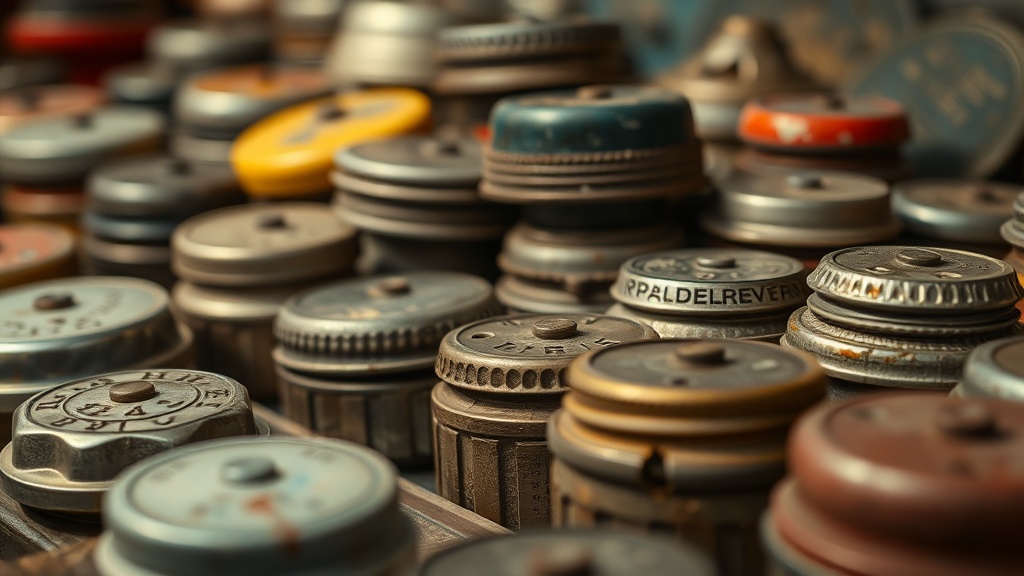
Spotting Authentic Vintage Metal Caps in Estate Sales

Over 70% of the metal caps found in modern estate sale "junk bins" are actually mid-century reproductions or modern replacements rather than true antiques. This guide explains how to distinguish genuine vintage metal closures from modern counterfeits by examining weight, oxidation, and manufacturing marks. We'll look at specific brands like Coca-Cola and Pepsi, the physical properties of tin versus steel, and how to spot the red flags of a "fake" vintage find.
Finding a high-quality metal cap in an estate sale pile can feel like hitting a jackpot. But most people walk right past the real treasure because they can't tell a 1920s tin lid from a 1990s reproduction. It's a mistake that costs collectors hundreds of dollars in missed opportunities.
How Can You Tell if a Metal Cap is Real Vintage?
You identify a true vintage metal cap by looking for specific signs of age-related wear, such as uneven oxidation, tool marks, and the absence of modern machine-perfect finishes. Modern reproductions often look too "clean" or use materials that don't age naturally. If a cap looks like it was made yesterday, it probably was.
The first thing to check is the weight. Real antique caps—especially those from the late 19th and early 20th centuries—often use heavier-gauge tin or steel. If you pick up a cap that feels suspiciously light or flimsy, it's likely a modern piece. A heavy, substantial feel usually points toward an older, more durable construction.
Look at the edges. A genuine vintage cap often shows slight irregularities from the crimping or sealing process. Modern manufacturing is too precise. If the edges are perfectly uniform and smooth, you're likely looking at a modern piece designed to look old. (Don't let a shiny finish fool you; many modern fakes use a thin layer of metallic paint to mimic the look of old tin.)
Check the oxidation patterns. Real rust or patina occurs through decades of exposure to moisture and air. It penetrates the metal rather than sitting on top of it. If the "rust" looks like it can be wiped off with a damp cloth, it’s just surface discoloration or paint. Real oxidation is part of the metal's structure.
The Three Pillars of Authenticity
- Material Composition: Tin, iron, and early steel alloys have distinct tactile properties compared to modern aluminum or thin-gauge tin-plated steel.
- Manufacturing Marks: Look for stamped logos or embossed text. Older caps often have less refined lettering than modern, high-precision stamps.
- Wear Patterns: Real age shows through pitting, scratches, and uneven color transitions.
What Are the Common Marks of a Fake Vintage Cap?
The most common sign of a fake is the presence of modern manufacturing-specific features like perfectly circular machine-stamped edges or high-gloss coatings. If you see a perfectly smooth, unblemable surface on a "100-year-old" cap, something is wrong.
One major red flag is the use of modern branding or fonts. For example, if you find a cap that claims to be a vintage Coca-Cola piece but uses a font or a logo-style that wasn't popularized until the 1980s, it's a reproduction. Always cross-reference the brand's history. You can check the history of Coca-Cola branding on Wikipedia to see when certain logos were actually in use.
Another tell-tale sign is the "scuff" factor. Modern fakes are often "distressed" to look old. This means they've been artificially scratched or chemically treated to look weathered. If the scratches look too uniform or the "rust" is only in one specific area, the item has likely been manipulated. True age-related wear is rarely that predictable.
Another thing to watch for is the weight of the metal. Modern aluminum-based caps are much lighter than the heavy tin-plated steel used in the early 20th century. If a cap feels like a piece of soda can aluminum, it isn't a vintage collectible. It's a modern scrap piece.
| Feature | True Vintage Cap | Modern Reproduction |
|---|---|---|
| Edge Texture | Irregular, crimped, or slightly uneven | Perfectly uniform, smooth, or machine-cut |
| Oxidation | Deep, structural, and hard to remove | Surface-level, easily wiped, or painted on |
| Weight | Relatively heavy (Tin/Steel) | Lightweight (Aluminum/Thin Steel) |
| Logo/Font | Period-accurate, potentially uneven | Modern, high-precision, or wrong era |
Why Does the Metal Type Matter for Collectors?
The metal type determines the rarity and the historical value of the piece, as different eras utilized different metallurgical-standardized materials. Knowing if a cap is tin, steel, or aluminum helps you categorize the piece and understand its true worth.
In the late 1800s and early 1900s, tin-plated steel was the standard for many food and beverage containers. This material is much more prone to actual rust and pitting over time. If you're looking at a piece from this era, expect to see heavy, dark oxidation. If the piece is perfectly shiny, it's likely a later, more modern version. This is similar to how you'd approach identifying maker's marks on antique glass—the material itself tells half the story.
Aluminum became much more common in the mid-20th century. If you find a "vintage" cap that is clearly aluminum, it's likely from the 1950s or later. While still collectible, it won't carry the same premium as a heavy-gauge tin or steel piece from the turn of the century. Don't overpay for an aluminum cap thinking it's an antique steel one.
The metal's reaction to the environment is also a huge clue. Steel reacts to moisture by creating deep pits. Tin reacts differently, often developing a dull, matte patina. Understanding these chemical reactions helps you verify the age of your find without needing a lab. It's a basic part of the "detective work" involved in this hobby.
When you're out in the field, always bring a small magnet. This is a simple, old-school trick. If a "vintage steel" cap isn't magnetic, it's either aluminum or a non-ferrous alloy. A real steel or iron-based cap will react strongly to a magnet. It's a quick way to rule out many modern fakes on the spot.
If you're interested in more general tips on how to spot valuable items in much larger quantities, check out our guide on how to find valuable items in the wild. The principles of material analysis remain the same whether you're looking at a coin or a metal cap.
The weight of the item is often the most telling factor. If you're at an estate sale and see a bin of metal caps, don't just look—feel them. The weight of a piece of history is much more substantial than a modern imitation. If it feels cheap, it probably is.
The catch? Some high-end reproductions are actually quite good. They use real tin and can even have convincing oxidation. In those cases, you'll have to rely on the branding and the specific manufacturing details to be certain. Always look for the small things—the tiny imperfections that a machine can't replicate easily.